Tuesday, October 24, 2006

"Sail away with me, to another world..."


"News is what somebody somewhere wants to suppress - all the rest is advertising."

So, sagely, said Lord Northcliffe, and this is indeed the noblest of journalistic sentiments, a phrase that should ring in the ears, throb through the marrow and tingle through the fingers of any self-respecting journalist.

Sometimes, though, even the most high-minded will enjoy the benefit of an exaggerated expenses claim, a paid-for meal (or, better, bar tab), or the lucky dip of the freebie.

I remember well my first freebie: a box of Jane Asher cake mix, that sat at the back of my cupboard for months before I did the decent thing and handed it over to my mum.

Since then, I must confess to reading books, listening to CDs and - during one strange phase of unsolicited baskets - munching on my favourite Pink Lady apples and, er, red grapes. Oh, and the free football tickets have been muchly appreciated too, though more so for the likes of the World Cup final than an epic Coca-Cola Championship clash between Leicester and Hull.

Travel journalists, though, surely have the most easeful of occupations - I think it's safe to Judith Chalmers is a stranger to the Samaritans. Exhibit A, I offer the excellent and enviable Shandypockets pages, put together by one of those globe-gallivanting hacks we all wish we could/should have been.

In fact, we met on my one previous, dim-distant-past holiday blag, one that I am actually happy to accept as my one and only, such was the pinch-myself pleasure of the whole experience.

Of course, the obligatory plugs may chip away at what little credibility I might have had, but I tried to keep the plugs down to an appropriate minimum - yet also there where deserved. But, well, that's the game, innit...

It was a while ago now, but I was reminded to dig it out after pondering what to read next, after finally finishing "Jane Eyre" and swiftly dashing through "Monsignor Quixote" by Grahame Greene. On a similar Spanish tip (the Greene, that is, not the Currer Bell), I should really now get round to reading "Death In The Afternoon". After all...


I’ve always liked Islands In The Stream.
No, not the Ernest Hemingway novel, but the Dolly Parton and Kenny Rogers duet.
Yet it was the book I tipped off the shelves in preparation for a week in the Florida Keys, the sinuous strip of more than 800 islands separating mainland US from Cuba.
This tropical ribbon running through the Atlantic and the Gulf of Mexico promotes itself as Paradise, but is also classic Hemingway territory, a land of adventure and daring.
Think of Harry Morgan, the Key West maverick of Hemingway’s To Have And Have Not, sacrificing his morals, his arms and finally his life to run guns, liquor and wantaway Cubans across the waters.
Or Santiago, the decrepit hero of The Old Man And The Sea, battling the raging waters in his epic – and ultimately, excruciatingly vain – efforts to land the perfect marlin.
Or grizzled old “Papa” Hemingway himself, a-huntin’ and a-fishin’ and a-boozin’ and a-brawlin’ across the Keys and his favourite Key West haunts such as Sloppy Joe’s sloppy bar.
Or, of course, a dilettante English journalist like myself, visiting to enjoy a few massages, down a few cocktails and generally soak up the sun.
The macho Hemingway would no doubt disapprove of the luxurious spa resorts springing up across the Keys, nevertheless entirely suited to the location’s sun-drenched, laidback ambience.
Fror a start, a facial would surely do little for his ruddy, hardened complexion beneath those brutish bristles.
Yet after pitching up at the palatial Hawks Cay resort, with its immaculate villas, rich buffets and live dolphin show, it would have been rude not to sample the new spa centre of which they seem so proud.
Expecting myself to immediately switch off and shut down completely, hypnotically chanting “Om”, I assumed I was doing something wrong during the first facial.
Random, petty concerns kept popping into my still-buzzing brain: how will Spurs do this season, should I buy the latest White Stripes album, if we’re evolved from monkeys then why are there still monkeys...?
But soon I was sinking, pleasantly savouring the mysterious-yet-soothing oils, the warm blasts of air brushing my skin, the taped piano trilling gently in the background.
Yes, I could certainly get used to this type of treatment.
I finally floated out of the treatment room feeling like a new woman – I mean, man. I even tried to convince myself I was making a defiant statement of macho resistance by, er, not shaving.
But resistance was inevitably futile when a little bit of pampering could feel this great – Hemingway can just go fish.
A 50-minute Swedish massage the following day was even sweeter, leaving me a blissed-out hollow of a functioning man for the remains of the day.
The people of the Keys are clearly thrilled with their flourishing spa centres.
We were treated to a tour of the recently-built facility at Cheeca, the longer-established rival to Hawks Cay and favoured retreat of both George Bushes and family.
Sadly we were not there to samples the massage facilities, but made up for it by scoffing the cuisine – menu headed by the top local delicacy, Key Lime Pie, a sweet, light cheesecake.
The Florida Keys are not merely rich in terms of the landowners and well-heeled visitors (ourselves, of course, excepted).
The area’s wildlife is a source of consistent wonder. During a powerboat tour, we spied a lone dolphin frolicking in the shallows, while flutters of exotic birds circled above busy schools of tarpon and marlin below.
For the time being, at least, the many whales, sharks, manatees and turtles to be found in the depths were keeping their heads down.
Our guide explained the importance of the mangrove islands and the sea grass sustaining so much of the surrounding wildlife.
Damaging these plants can incur hefty fines for careless sailors, rising into millions of dollars. We kept a cautious, respectful distance.
An alternative insight into the Key creatures was found at Richie Moretti’s Turtle Hospital in Marathon.
If that name conjures up images of cartoon ninja critters sporting slings, bandages and plasters to accessorise their multi-coloured bandanas (well, it did for me), then the reality is a little more harrowing.
Here, 25-stone turtles, covered in vast tumours or showing off mutilated limbs, waded painfully in their shallow basins.
Richie bought the next-door motel in 1981, when this turtle hospital building was then a lap-dancing club called Fanny’s.
He funds the hospital entirely through the motel’s $200,000-a-year proceeds – a good example of Keysian economics, you might say. Or, indeed, might not.
As a committed veggie, I was not in a position to judge the overflowing, fresh fish platters thrust our way at every restaurant, including the lively Island Tiki Bar in Marathon or the Islamorada Fish Company in, well, Islamorada.
I was assured, though, of their excellence – and the portions would challenge even the hungriest Hemingway.
Probably the best meal we enjoyed, though, for both supplies and setting, was on the charmingly-named Pretty Joe Rock Island, a tiny seabound enclave owned by the Banana Bay Resort.
This hideaway is popular with honeymooning couples, and little wonder, with its luxury en-suite bathrooms, healthily-stocked kitchen and picturesque gardens.
After a tranquil two hours, within sight of the shore yet feeling care-lessly adrift from the world, we had to be dragged away.
Key West called – the southern tip of the US but where the Keys start to come to noisier life.
If I was feeling especially, generously patriotic, I’d describe it as like Brighton, only sunnier and hotter.
This is a bustling resort that prides itself on being a trendy, liberal party town – oh, and it rivals San Francisco for campness.
Certainly the delightful old colonial homes are more densely packed than in the Upper Keys, and the strong Cuban townships dating from the cigar factories’ 19th century heyday are full of character.
Visit El Masa de Pepe for sumptuous Cuban cuisine and an enthralling exhibition, sure to leave you whistling Guantanamera for days to come.
Our accommodation, the heritage-listed, late 19th-century Cypress House hotel, was an oasis of bohemian, classy calm.
The legendary main drag, seven-mile-long Duval Street, summons any self-respecting barcrawler – and again, for research purposes, I felt compelled to do my duty.
Anyone failing to realise Sloppy Joe’s was Hemingway’s favourite hang-out either has their eyes closed to the all-surrounding merchandise – or has knocked back one too many Mojitos.
Unsurprisingly, though, Key West’s finest attraction is nature itself.
Every evening at 6.30pm – yes, every evening – the sunset is celebrated with an exuberant festival on the shore.
Musicians, jugglers, trapeze artists, wizened old men pushing cats and dogs through bizarre hoops – all come out to play and greet the setting sun as it dips graciously, captivatingly into the sea behind Sunset Island.
This patch of land was originally known as Tank Island, but as the swanky condiminiums (condiminia?) multiplied, investors understandably opted for a more romantic-sounding name.
I watched the sun go down to the soundtrack of Mustapha, an ancient Jamaican busker plucking out simple, affecting versions of What A Wonderful World and Island In The Sun on his acoustic guitar.
The next evening we took an even better look, boarding Sebago’s Sunset Cruise, a two-hour voyage of simply sitting back, sipping champagne and watching the sunset at closer quarters.
A little sore-headed after such heady sights (and a few heady drinks), another massage – this time at the Pier House Resort and Caribbean Spa – couldn’t do any harm.
Nor could a leisurely tour of Key West’s quirkier tourist attractions, including the new-ish Butterfly and Nature Conservatory.
Careful where you tread, though, when exploring a tropical greenhouse habitat home to 1,200 vivid little winged wonders.
Of course, there is also Hemingway House, complete with smug ancestors of his beloved cats – and, not much farther on, a marker of the United States’ southernmost point.
In fact, you can also spot the southernmost house, the southernmost barber’s, the southernmost grocery store, the southernmost gallery, the southernmost horse being flogged...
I also enjoyed the Key West Shipwreck Museum, not just for the hammy antics of the historically-dressed tour guides, but also for the best aerial view of Key West – for those prepared to clamber the rigging, anyway.
The Old Town Trolley Tour is also essential, even if only to get your bearings and cherry-pick where to explore further.
Just be warned, though – our banter-loving guide’s best joke was: “Sorry about the bumps ahead in the next road. Though it’s not my fault, just as it’s not your fault. It’s the asphalt.”
(I laughed.)
Our final full day was taken up by something a little different, a trip to the newly-opened Walkabout Retreats venture, back towards Marathon.
The retreat is devoted to helping guests manage stress better, with “treatments” ranging from yoga, bike rides and kayaking to thick fruit smoothies.
Perhaps equally beneficial would be a meal at the ultra-stylish Hot Tin Roof restaurant – inspired by another noted Key West resident, Tennessee Williams, who perhaps could have been happier with his lot, all things considered.
Tucking into rich food and wine while overlooking the peaceful harbour was the perfect way to see out the Key West experience – though the following day’s 45-minute flight from Key West to Miami in a low-flying mini-jet had its photo-op merits, too.
A busy week, then – and yet a ridiculously-relaxed and relaxing one, at the same time.
It was no surprise to hear almost every Key West resident explain how they had moved there for good after visiting once on holiday.
That sounded perfectly reasonable to me – if not quite personally realistic.
Alternatively, of course, there are other Hemingway-inspired adventures to try.
Bull-fighting in Spain, after Death In The Afternoon?
Braving The Snows Of Kilimanjiro?
Hmm, maybe not for me just now, thanks.
After this, they sound a little too stressful.

Sunday, July 09, 2006

My World Cup runneth over.
I'm all football-fatigued.
I feel well and truly Weltmeisterschaft-ed.

While I hope bits of "real life" have been sprinkled here and thereabouts during my last month or so of blogging, "normal service" should be resumed here shortly.

You have been warned, oh dear, dear, loyal reader(s)...
Nope, maybe I was right the first time.

"And I'll take a high dive, some day I'll never land..."


My voting slip, handed in half-an-hour before the deadline, opts for giving third place (one point) to Germany's Miroslav Klose, second place (three points) to Italy's Andrea Pirlo, and first place (five points) to Italy's Fabio Cannavaro.

That loud scratching sound you may have heard shortly before 10pm BST was caused by several hundred journalists simultaneously scoring a thick line through the words "Zinedine Zidane".

Cannavaro should now be a shoo-in, though Fifa's awards can still surprise.
A form just handed round the media centre reveals "The Most Entertaining Team award presented by Yahoo!", for the side "which has done the most to entertain the public with a positive approach to the game", goes to... Portugal.

Well, acting counts as a branch of entertainment, I suppose, but still...

"None shall sleep..."

 
That moment that finally made the final worthwhile.
After a disappointingly mediocre match, a subdued crowd more keen on jeering than cheering, the unhappy shoot-out having to break the stalemate, and the disaster of a departing legend going loco – there’s an almighty tingle as Fabio Grosso’s ball blazes into, almost through, the back of the net and the split-second of realisation suddenly surges: the World Cup has just been won.
Abruptly, the air is filled with pumps of orchestral pomp – glitter and gunpowder shoots upwards into the Berlin sky, showers down on the German grass,
Darting figures leap, skip, dash and dart maniacally back and forth and nowhere and anywhere, while their lighter-shirted counterparts slump, each in their own loneliest daze – and scurrying, single-minded stewards stream from every entrance, hauling contraptions and shards of a stage, duties to perform upholstering this most emotional of performance art.
Football – the most seriously frivolous thing in town...?
Why, with all the world’s cares and crises put safely out of sight and out of mind, can instead all glorious life seem briefly to sit inside this collision of architectural form and era – the Olympian grandeur (and folly) of Hitler’s Olympic Stadium, all unnecessary columns but all-devouring stands topped off by a bathetic, plastic-looking modern rooftop, a cut-away at one end opening the monster’s mouth towards the city and civilisation beyond.
An empty Olympic flame’s seat tonight successively occupied by Toni Braxton, Il Divo, some wackily-outfitted escapees from what seemed a tiresomely-gurning performing arts institute, and then Wyclef Jean and the ever-mesmeric Shakira, all melody sadly swamped within one thudding, muddy pound of artificial drums.
Well, well, why...?
I dunno – but I know I didn’t want to leave, staying even for and beyond the inevitable turgid "We Are The Champions", and being rewarded for such perserverance by the equally inevitable, infinitely more emotive "Nessun Dorma".
As player of the tournament, ultimately-vanquishing Italian lion Fabio Cannavaro could no longer keep his granite features quite so impassive anymore and grinned, just grinned.
  
Right team, wrong performance. Sadly this was far from the classic final called for, these two occasionally-expressive yet more-often-impenetrable European powerhouses managing to cancel each other out, across the pitch.
Gennaro Gattuso sticking close to Zinedine Zidane, or perhaps France happy to force Gattuso back not forwards. Cannavaro allowing forlorn-in-a-French-shirt Thierry Henry no time to turn. Francesco Totti barely getting a coherent kick thanks to the French back six...
Ah, but Zidane - Zidane, Zidane, Zidane.
 
Having started the tournament so badly, then returning in such style, here he managed to end at his worst. Not just the match, or the tournament – but his great playing career.
"Outrageous" – one of those words so easily-over-used, like "fantastic", or "sensational", or "absolutely", absolutely. But tonight, he really was.
No longer simply, outrageously talented. But outrageously audacious, with the cheekiest of chipped penalties to – just about – give France an early lead.
And two hours later, just outrageously stupid, to hurl the meatiest of headbutts into the chest of involved-in-everything Materazzi, finally "earning" Zizou a long-delayed red card.
His final contribution on a football field – that same head that powered those two World Cup-winning headers into the St Denis net back in 1998, now making an irredeemably savage contribution to another, sadder final.
Silly boy – and, with the World Cup’s dirtiest player Henry (I’m only going by Fifa facts, honest...) having just preceded him off the pitch, albeit replaced by a substitute, France were without their two totemic playmaking presences not only for the final minutes, but also the do-or-die shoot-out. When everyone hit the target – except for David Trezeguet, golden-goal match-winner when these met in the Euro 2000 final, who this time merely hit the bar.
And unlike Zidane’s earlier ‘normal’ penalty, this one would only, tantalising bounce the wrong side of the line… So, having stood and dawdled, each alone on the pitch an hour before kick-off, those two American-comedian-(sort-of-)-resembling managers, Marcelo “Larry David” Lippi and Raymond “Eugene Levy” Domenech, again trod the turf even after their players had departed down the tunnel.
Lippi no longer with hands jammed in pockets, but arms raised in triumph – Domenech standing stolid and silent, those Sam The Eagle brows barely twitching but the eyes rolling over the celebrations so nearly his own.
And so now for me, time to trudge back to boring reality – after tomorrow’s long drive back to Blighty, picking up those dull, put-off duties of moving home, hunting for a new job, and even – ulp – later this week entering the final dread year of my twenties...
But what a distraction this has been, England’s embarrassments and tonight’s mixed emotions aside...
The World Cup: it really doesn’t matter. But that just makes it matter more…
But each one must end.
As a commentator once famously said, as he drew down the curtain on one more World Cup final... ... "Das Spiel ist aus!" (Well, it makes a change from the usual one...)

"On the 31st floor, your gold-plated door won't keep out the Lord's burning rain..."


"The construction of the Kaiser Wilhelm Memorial Church is making such very good progress, the ignorant populace never cease to be amazed."

How charmingly-put by architect Franz Schwechten, writing in 1894 of the stately centrepiece of a vast church-building programme, lofted in unbashful tribute to the late Kaiser Wilhelm I on the orders of his grandson Wilhelm II.

And yet, after being battered by Allied bombs in 1943, the still-just-about-standing ruins have been transformed into a symbol, not of vainglory, but of humility - a ravaged reminder of the horrors of war, set in a self-sufficient square at the tip of the department store-dominated Kurfurstendamm.

The "broken tooth", as it's now nicknamed, is quite a sight - more raggedly beautiful now than in its once-epic glory, pictured in stills which suggest a neo-romanesque masterpiece suddenly plonked in lonely yet awesome isolation on a roundabout.

Inside stands a tiny, gleaming cross gifted by the similarly ill-fated, similarly defiant Coventry Cathedral - while the same cathedral has donated a cross made of nails to the now-next-door squat, decahedronal "replacement" church - where iris-dazzling cyan streams through tiny squares of stained-glass, and a grim-eyed, golden Christ tips awkwardly above the altar.

The brief must have been: build something as different as can be, from what once stood - now totters - alongside. The effect of both is unnerving - yet touching too.

"Tonight the bottle let me down..."

Long-gone England, Brazil and Argentina seem to be represented still in Berlin only by the dregs of replica shirts and scarves left on sale in everything-for-a-euro superstores.

While I picked up a couple of tasteful(ish) WM2006 mugs, and a fascinating book (in helpful English and educative German) about East Berlin, the departed team souvenirs sat on shelves alongside bottles of wine that looked about as unappetising.

Yes, that's bottles of wine costing one solitary euro apiece - or about 70p.

Surprise surprise, I wasn't quite tempted to try - though I suppose the "wine" might at least go well on chips.

"But still the memory stays for always, my heart says danke schoen..."


Bad news from Berlin: thunderous monsoon-like downpours meant an open-air concert by musicians from 2010 hosts South Africa had to be cancelled.
Even worse – a James Blunt gig in the same city’s adidas "World Of Football" still went ahead.
But even his wailing went largely ignored as jubilant Germans seemed inclined to insist: third place is the new first.
From the Brandenburg Gate to the suburbs on the outskirts, from Saturday night’s final whistle to last night’s kick-off, this was a German party.
The stray clusters of Italian shirts or French tricoloures stood out shyly as tolerable impertinences.
Meanwhile the smoke smothering Berlin’s trendy Kurfurstendamm shopping drag wafted from makeshift fireworks.
But it seemed to have been sent all the way from Stuttgart and the ‘little-final’ third-place play-off.
Jurgen Klinsmann and his squad would follow, to lap up the rapture of 500,000 fans crowding the tumultuous "Fan Mile" this morning.
But not before Chancellor Angela Merkel, a pudgy Anne Robinson lookalike, had led that lop-sided awards ceremony in Stuttgart, a World Cup Weakest Link.
Germany - you win a set of shimmering bronze medals, a fireworks-and-lasers light fantastic, and the adulation of a nation.
Portugal – you leave with nothing. Goodbye.
Just one long month ago, the sight of swarming German flags and sound of soaring German anthems kicked off as many anguished national debates as they did backyard five-a-sides.
Yet this weekend there was no embarrassment at all as the Klinsi-inspired masses gridlocked the streets in celebration.
The odd alienated non-football fan would here and there give themselves away, by attempting a panic-stricken 27-point turn in search of a rare empty alleyway.
Strange, this European instinct to mark a footballing triumph, not by hitting the bars to get tanked up, but heading to their cars and tooting horns until tanked out.
Paris and Rome must both be on red, amber and green alert tonight, as both sets of blues duke it out here in Berlin (though France will be in white again tonight, as they have been for much of the tournament - even against port-red-clad Portugal. Surely the black-and-white-TV-viewing public isn't large and influential enough to have insisted "Allez les bleus" be replaced by "Allez les blancs"...?)
Ah, but anyway - the Germans have got in there first with the revelries.
Newspaper headlines and adverts are today proclaiming the German side Diana-sickly-style "Weltmeister unserer Herzen" – "World champions of our hearts".
As JFK might have said: "Wir sind alle Berliner" – and I don’t mean small, sticky doughnuts.

"And now, the end is near, and so we face the final curtain..."

Members of the media have until midnight to vote for Golden Ball winner, the best player of the tournament (in previous contests the deadline has been half-time of the final, helping Oliver Kahn grasp the Golden Ball last time more confidently than the second-half shot which he spilled into Ronaldo's grateful path...)

I think I'll wait until then before deciding between Fabio Cannavaro and Zinedine Zidane, but here - for what scintilla it's worth - is my team of the tournament (for the time being...):

Gianluigi Buffon (Italy)

Gianluca Zambrotta (Italy)
Lilian Thuram (France)
Fabio Cannavaro (Italy)
Philipp Lahm (Germany)

Maxi Rodriguez (Argentina)
Andrea Pirlo (Italy)
Zinedine Zidane (France)
Maniche (Portugal)

Miroslav Klose (Germany)
Fernando Torres (Spain)

On the bench: Ricardo (Portugal), Rafael Marquez (Mexico), Willy Sagnol (France), Javier Mascherano (Argentina), Juan Roman Riquelme (Argentina), Ze Roberto (Brazil), Thierry Henry (France).

Odd how poorly strikers have performed this tournament, with a relatively meagre haul of five looking enough to reward Klose with the Golden Boot. Perhaps less surprisingly, there has been a dearth of obvious young stand-out starlets, leading to Lukas Podolski winning the best young player prize from Gillette, despite looking very raw and ragged in Germany's first two games, opening his account against half an Ecuador team already 2-0 down, then adding two easy-ish strikes against Sweden when Klose had done all the hard work each time.

At least he proved dangerous enough times when it mattered, whereas Cristiano Ronaldo merely looked like he might just prove dangerous most of the time (when not taking a jog along his invisible springboard, of course...)

"Temperatures rise as you see the whites of their eyes..."


Among the standard pre-season friendlies against the local likes of Stevenage, and such glamorous, unusual opponents as, er, only-recently-relegated Birmingham, Spurs have lined up a foreign jaunt that may just seem tempting: an August 5 match at Borussia Dortmund.

This evening, the Olympiastadion Berlin will become the tenth of the 12 German World Cup stadia I'll have visited for a match this summer (Hamburg and Leipzig are the two missing from my collection). Berlin may change my mind, but so far by far my favourite has been Dortmund.

The official Fifa guide to the tournament describes the Westfalenstadion as "the Bundesliga's Opera House". A nice description, but not really suitable, I would say. Maybe save that one for the imperious Munich or Stuttgart.

It's funny - or not, actually - to think about how the World Cup final tonight was 'supposed' to kick off at Wembley. Six years and £757million after England’s bid was rejected, Wembley still looks little more ready to stage the Brent WI’s summer fete.

For £213million more, Germany has kitted out 12 spectacular stadia fit indeed for this wunderbar World Cup – including Hanover’s ahead of schedule. Most expensive, £193million Munich is coated in “lozenge-shaped cushions’ that appear as an extra-terrestrial landing – or a giant gift with the wrapping left on.

In stark contrast, the steep banks of the Dortmund and Cologne terraces resemble old-fashioned Subbuteo-style grandstand constructions - only with more animation in the spectators, unless, perhaps, Switzerland are playing.

Like several, Dortmund's stadium has been temporarily stripped of standing areas – reducing capacity to a mere 65,000. But those sheer inclines, the sturdy right-angled roof contours, and the proximity of pitch to seats at least suggest all prawn sandwiches should be scoffed elsewhere. An anxious goalkeeper can almost feel the fans’ hot Bratwurst-scented breath upon his shoulders.

Greece’s German coach Otto Rehhagel has rued the trend for modern stadia to all roll off the same computer programme, sacrificing unique appeal. But there are quirks here to admire – from the five-star Gelsenkirchen’s retractable roof and pitch, to the Palatinate city vistas from Kaiserslautern’s lofty setting.

Stuttgart’s Gottlieb-Daimler-Stadion – wisely renamed from the Adolf Hitler Arena – offers rounded open, crisp-bowl terraces, rolling back from a pitch-distancing athletics track – plus Europe’s largest video screens. Perhaps these widest of wide-screen TVs are a response to Frankfurt’s 30-ton video cube, now with added dent courtesy of Paul Robinson.

Argentina’s urban choir, relentlessly chanting their ‘Vamos, Vamos’ anthem while pogo-hopping and flag-twirling, could still fire the emotions on a wet Wednesday at Underhill. But these 12 German Wembleys have done their bit beautifully. As even Phil Daniels could now concede: there might just be something to your Vorsprung durch Technik, you know.

But still, Dortmund - "the Bundesliga's Opera House"?
Not quite: the Bundesliga's Bear Pit, more like.

Wednesday, July 05, 2006

"I don't believe that he's the one - but if you insist, I must be wrong, I must be wrong..."

Frank Lampard, David Beckham and Wayne Rooney could all be named on Thursday in the official ‘best squad of the tournament’.
Could be – unless Mastercard belatedly come to their senses, that is.
All three were somehow chosen by Mastercard among the finest 69 performers at this World Cup, a selection to be whittled down to 23 today.
Bolton and Mexico striker Jared Borghetti also made the list – despite missing most of the first round through injury, then heading into his own net as Mexico fell to Argentina.
Whoever makes the squad, this could be Mastercard’s last.
They are furious with Fifa over a new sponsorship deal allowing rivals Visa to become ‘official partners’.
Mastercard’s image was tarnished by the 2006 ticket system, which denied card-holders with other firms the right to book online.
The confusion hardly reflected well on Fifa either - but Mastercard could now prove a convenient, if bitter, scapegoat.
Speaking of which, that well-known winker Cristiano Ronaldo is in the running for the Mastercard squad, and the Gillette-sponsored best young player prize.
But an internet campaign is trying to skew the online vote in favour of Luis Valencia.
For all his wing trickery, had Valencia actually been able to shoot then it could have been Ecuador not England facing Ronaldo and pals last Saturday.

Tuesday, July 04, 2006

"You've got a lot to answer for..."

Karl Wald may appear a harmless elderly gent, but he only happens to be the devilish brains behind the dreaded penalty shoot-out.
And yes, he is German.
Yet in a nation which so prides itself on penalty expertise, Karl's profile has remained about as low as a Beckham corner failing miserably to beat the first man.
It was he, then a humble Bavarian referee at a local conference in 1970, who first suggested using a shoot-out to settle drawn matches.
Bavarian officials accepted the idea, the solution soon spread across German leagues, and eventually Uefa and Fifa were persuaded.
Yet Karl’s role in footballing history – and heartbreak – has gone unnoticed.
Until now.
He has finally emerged from the shoot-out shadows after his homeland celebrated yet another spot-kick success, this time on home turf.
Karl, now 90 and a referee since 1936, is unapologetic - despite the incessant despair, and Pizza Hut adverts, he has helped inflict on the English.
He insisted: ‘I always believed I was right.
‘It’s the only way in which a result can be achieved fairly. Everything else was not really a solution.’
He may just have a point there.
The previous system, involving a tossed coin or coloured disc, left even more to chance.
A wrong call knocked Yugoslavia out of the 1968 European Championships after a semi-final stalemate against Italy.
Former Liverpool manager Bill Shankly once went typically apoplectic to discover captain Ron Yeats was denied a choice of head or tails after a Fairs Cup draw with Cologne in 1968
The referee presented a disc with Liverpool red on one side and Cologne white on the other.
Affter the spin went against his side, Shankly angrily insisted on his right to call white if he wanted – to no avail.
Of course, Liverpool went on to benefit from the spot-kick system in last year’s epic Champions League triumph over Milan.
So perhaps, rather than condemning Karl, English fans should grudgingly accept his belated moment of fame.
After all, if our cricket captains’ coin-tossing luck is anything to go by, these 40 years of footballing hurt could have been equally excruciating either way.

Of course, meine Damen und Herren, it only works if you manage to see out 120 minutes without conceding, not a mere 119...

Sunday, July 02, 2006

"It is so long a chain, and yet every link rings true..."

The Blue Carbuncle, the Engineer's Thumb, the Twisted Lip, the Yellow Face - the Red Headed League, the Reigate Squire, the Norwood Builder, the Speckled Band... these and all 51 more have all perplexed, intrigued and finally illuminated me, even as the smudge-covered, dusky-coloured hardback weighed down what should have been more dully-useful holiday luggage over the years...

... but for all my entrancement in my old-fashioned compilation of every short story, every charming pencil-black original illustration from The Strand magazine, every frustrated attempt to make progress in the impossibly-complex Spectrum 128k computer game, every visit to that famous address either in passing or in museum-exploring pilgrimage, every rippingly-antiquated shards of awkward dialogue and every seamily glamorous glimpse of London Victoriana...

... I'm ashamed to admit only just now getting around to reading my first Sherlock Holmes novel, The Hound Of The Baskervilles - and, well, enjoying the yarn - while being slightly disappointed by the actual absence of mystery. Yet even more disappointed upon reaching the end of the tale, the end of the reliable reading pleasure.

Onwards, then, to those other inexplicably-neglected long'uns: A Study In Scarlet and The Sign Of Four.
And then, to delve back again guiltlessly and gloriously, into those impeccable short forms, all 56 varieties.

Draw your chair up, and hand my me violin...

"It's not the despair. I can cope with the despair. It's the hope..."

Who said the Germans have no sense of humour?
In that fraught waiting-game between final whistle and fatal shoot-out, the speakers started blaring out “Que sera, sera, whatever will be, will be…”
Except the England fans lustily singing along surely, deep down, realised that what will be, will be yet more penalty pain.
Thankfully, the mischievous German DJs had the good grace not to follow up with Oops, I Did It Again.
For this was the most predictably depressing déjà vu – all over, all over again.
The 52,000-capacity Gelsenkirchen stadium – unofficially labelled ‘six-star’ by Sepp Blatter – had been smothered in bright English crimson rather than deep Portuguese port.
But within minutes of Ronado’s final flourish past Paul Robinson, the red swathes were breaking up into patchy seats of blue.
Some, understandably, wanted to flee the scene of the crying as soon as possible.
Others, equally so, could not bring themselves to move a muscle more than the tear ducts.
Yet some 30 minutes after the defeat, some last dregs of defiance rose from the depths to swell into a last chorus of “England! (clap-clap-clap) England! (clap-clap-clap)”.
Earlier, those same voices had been hailing that unlikely hero, “One Owen Hargreaves, there’s only one Owen Hargreaves”.
Even earlier, they had urged the ranting Luis Felipe Scolari to “sit down, shut up”, before demanding: “Who the f***ing hell are you?”
The World Cup-winning coach who holds the tournament record for consecutive wins, for a start.
The manager who embarrassed the FA by turning down England’s advances.
And the man who has now knocked England out of the last three competitions.
That’s who he is.
It was certainly a humbler, if darkly satirical, mood which was settling on England supporters as they grudgingly flew home yesterday.
One sun-braised supporter in Cologne, between mouthfuls of airport breakfast, insisted on re-enacting Wayne Rooney’s fateful stamp-and-shove routine.
Unsurprisingly, his bleary mates were reluctant to play the panto villain parts of Cristiano Ronaldo and the fertility-threatened Carvalho.
Another group steeled their stomachs for the flight by ordering a round of 5am beers.
“Klein oder gross?”, the unperturbed waiter parried.
Gross, of course.
At least absent from this airport were the fans who had inexplicably turned up to the game in shirts branded “Bin Laden 06” on the back, and Osama rubber masks on their faces.
The jubilant, jovial Germans will surely miss the (mostly) benignly rowdy England fans they have cheerily indulged.
The much-mocked team, however, will not be much-mourned.
It seemed sadly apt for England’s so-called “golden generation” to have its World Cup dreams buried in the former mining stronghold of the Ruhr.
The likes of Hargreaves, Neville and Terry – and, of course, the Coles - dug deep in adversity here.
But for too much of this campaign to convince as credible world champions, Eriksson’s England were the pits.

Saturday, July 01, 2006

"We don't need no semi-final..."


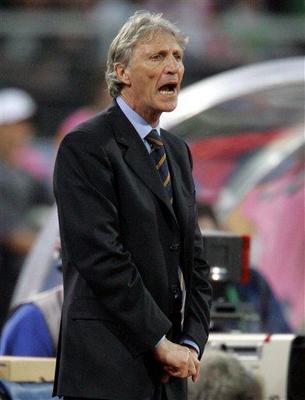
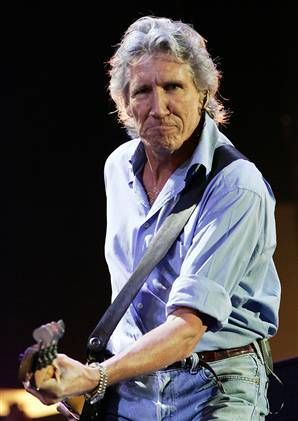
At least now Argentina are out, ex-manager Jose Pekerman can go back to his day job - feuding with Dave Gilmour over who owns Pink Floyd...

"You see, things can change - and walls can come tumbling down..."


While I’d been looking forward for ages to finally visiting Berlin – indeed, finally visiting part of the old, infamous Eastern Europe – the one thing I didn’t expect was for it to seem quite so quiet.
Especially two days from a Germany-Argentina World Cup quarter-final, but that shall be the very last mention of football. In this posting, anyway.
Every year I’ve told myself I shall finally get around to doing a bit of an Eastern European tour – starting, perhaps, from borderline Bohemia, through Hungary (Budapest, especially), Poland (Krakow, Auschwitz), Romania (er, somewhere), Estonia (Tallinn) and certainly Czech Republic (certainly Prague), in whatsoever order seems most suitable.
Except, many of these years on and the East more and more Westernised with each passing one, I still haven’t got around to it.
But now at last I’ve breached that now-invisible Iron Curtain and wandered through the Brandenburg Gate into (what was) East Berlin.
Even though passing through said Gate was a little less straightforward than you might expect nowadays, thanks to the interfering, impassable barriers and backstage area attached to some “fan fest” going on there for an obscure reason…
This was merely a minor detour, however, onto the stately Unter den Linden, lined like so much of Berlin with great bushy green trees on all sides, behind which the dusky brown buildings stand stolid and graceful – treasured by the old GDR rulers when Unter den Linden was under the East Berlin remit, despite the brutal Sixties towerblocks and graffiti-smudged warehouses and tunnels that still survive from those neglectful years.
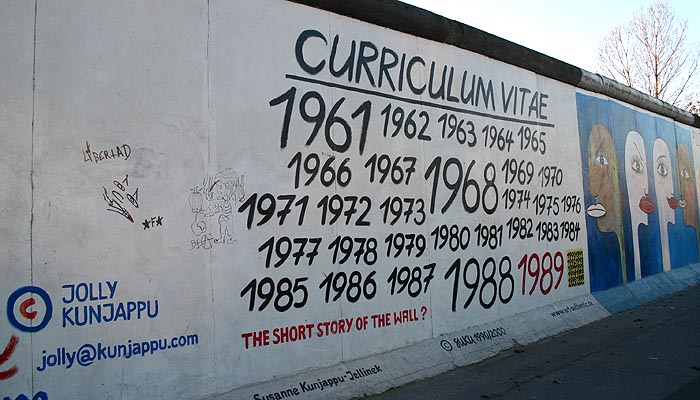
Thankfully, Unter den Linden remains what seems to be one of the few Berlin thoroughfares untouched by the omnipresent graffiti. Yet where the aerosol artists’ “work” doesn’t seem too inappropriate, however, are those few still-standing sections of the Berlin Wall – preserved nowadays as the East Side Gallery, some 1,500 metres of brickwork, now covered in officially-approved artwork from all corners of the world, but rubbed over many more times by unofficial, unapproved scrawlers.
I walked alongside the stretch in between the Ostbahnhof and the Oberbaumbrucke, surprised at first at how tall (or not) the wall seemed, but on getting closer impressed and even a little intimidated by how its size and solid immensity seemed to swell, the nearer approached. Of course, the barbed wire has long gone, and the patrol guards, and the watchtowers – how much, then, could any visitors 17 years after the fall try to appreciate what it was, how it felt to be living on either side with such an odd but powerful obstacle?
There's the tale of one of the early men employed as border guards, patrolling the wall's ramparts as one of the forces ranged against the organised escape gangs holing up in nearby houses and intricately carving out tunnels. One day, peering over onto the western side, the guard had the sudden thought: one leap, a quick burst of pace, and he'd be over and safe, free from the known restrictions of the East and free to enjoy the unknown yet imagined pleasures of the West. And so, suddenly, he did - attracting angry bawls and catcalls from the colleagues he was leaving behind, and some confused gunfire, but managing to make it far enough in flight. He must have left loved ones behind - did he think his escape would enable him to better provide, perhaps, for them? Or did he feel guilt at his own liberation at the possible expense of others'? Such adrenaline-fuelled, emotional thrashings which seem so unimaginable here and now...
And yet, for all the evils and divisions perpretated by the all-seeing Stasi, there felt something to bleakly admire in the sheer audacity and physical presence of such an obstacle, built almost out of nothing virtually overnight – surprising almost all, save one alert and suspicious Reuters correspondent in the city who cabled his newsdesk bosses that something might be about to happen, only to be ignored because it was a weekend.
When I went through a very stoooodenty arthouse film phase – well, watching whatever they might be showing each week at the Mac (Midland Arts Centre) complex in Cannon Hill Park round the corner from me in Balsall Heath, I mean, Edbaston – one of the foreign films which struck me most was called Das Versprechen (The Promise), tracing the relationship of a pair of teenage lovers whose attempt at an underground escape from East to West Berlin in the Sixties only manages to get one of them across safe and sound.
Their parallel lives apart are then traced through the 1968 rebellions, their respective marriages and parenthood and occasional written contact through the 1970s and 1980s, culminating in the drama of the wall falling and their eventual, hesitant reunion in 1989. Perhaps revisiting it would reveal elements of corniness, but the combinations of individual human dilemmas – and ageing, and changing hopes and expectations – against such a powerful historical backdrop was so memorable, especially the exhilarating ending. Just ambling alongside one longer-lingering stretch of this inanimate structure which yet became the focus of such intense emotion, brought back some of that wonder.
And then… With no set desire to visit any other obvious landmarks – the old Checkpoint Charlie is now little more than a sign, watchtower dismantled by developers secretly six years ago – I just kept walking: over the Oberbaumbrucke, across the River Spree that curiously keeps running along mere metres behind this stretch of Mauer, houses and apartments either side peeking over at each other where once they were kept apart in spirit and subject but not in sight. Along the streets now one side of the wall and the now-invisible dividing line, now the other – so many feeling so similar, yet with those brutalist Eastern blocks occasionally rising up as stark reminders on the commercially-ever-renovating landscapes. Or certain sets of traffic lights on the eastern side retaining their old-style, alternative green and red man appearances.
On Friday morning, before heading to the both impressive and jarring Olympic Stadium – classicism-aping castle ramparts of Third Reich grandeur, now topped with a plastic-looking lid – my Dad and I took the U-Bahn to the Jewish Museum, where Daniel Libeskind’s jagged creation explores the stories of Jewish famous and until-now-anonymous since medieval times but not unexpectedly, especially from the 1930s onwards – but also forces the visitor to confront a certain upheaval of the senses. Say, with a heavy clanging door opening into a triangular, lofty but drearily dark and silent chamber, with merely one sickly shard of light from one corner, the dim vision of an unreachable ladder to an unseen roof: and just whistling echoes, grim uneasiness. Is this how it felt to be herded into the unknown, yet slowly-realising darkness of death, at Auschwitz, or Dachau, or the near-here Sachsenhausen.
Well, of course not, we were merely playing, merely attempting complacently to empathise. But emerging back out into the eerie artificial light of a recognisable, real and normal museum aisle – and then onto the same old streets again outside – felt
Suddenly sport didn’t seem quite to seriously all-consuming, after all.
Then again, within a few hours, to see and hear the outbursts of joy and fellow-feeling and sheer grinning, hooting mania of the celebrating city – it seemed worthwhile to cherish that certain special value in frivolity, too.

Friday, June 30, 2006

"Hesitating to become the fated ones..."

Berlin today stages its biggest sporting event since a rather controversial little Olympics in 1936.
When Germany and Argentina take the field this evening, the 2006 World Cup will have gone a whole 66 hours with a ball kicked in anger.
Or in England´s case, languor.
And Berlin can be entitled to feel more impatient than most.
A vast Coca-Cola poster, replicated across the Berlin skyline, proclaims: ´1954 Bern, 1974 München, 1990 Rom, 2006 Hier´.
That 1974 German triumph was achieved with only three run-of-the-mill group games in then-West Berlin.
And when the 1988 European Championships came to German, pre-unification Berlin was missed out entirely.
No wonder an estimated 65,000 people took to the streets of Berlin celebrating last Saturday´s victory over Sweden in Munich.
Yet the last two days have seemed strangely subdued in the capital - the calm before the ´Sturm-und-Drang´, perhaps.
The bulbous, Eiffel-outsoaring TV Tower, so long an odd symbol of East Berlin, has been given a pink lick of paint to resemble a giant football - owned by Barbie.
Here and there you can spot a straggle of early-arriving Argentinians, even-earlier-arriving Britons or Brazilians.
Or a stray hazy Aussie, who can´t quite bring himself to follow his team home yet.
But the big screen and the ´fan fest' at the Brandeburg Gate look a little lonely, dominated by paid and voluntary staff filling in time.
Even the omnipresent mobile beer stalls haven´t all bothered to open all hours yet.
Today they will, though.
The second round - indeed, the whole tournament since the second set of first-round matches - may have been a case of ´never mind the quality, feel the quantity´.
But now the business end of the World Cup will finally hear from Berlin its Wilkommen, Bienvenue, Welcome - and hopefully live up to those premature boasts of ´best tournament ever´.
These past two days have felt like two too many.

"Do you remember Walter...?"

England is not the only country to indulgently wallow in World Cup nostalgia.
Germany may have won the trophy three times to our sole success.
But for England’s 1966, read West Germany’s 1954 – and for Bobby Moore, see Fritz Walter.
Black-and-white images still surround, of the first German side to win the trophy – a surge of sporting optimism in a land still struggling with post-war reconciliation.
As elsewhere and anywhere, football provides a cherished, collective folk-history – the game remains the same, only the special dates, names and golden moments differ.
The heroes of 1954 can still be seen in public monuments, on big and small screen in archive and dramatised form – and even, this summer, in MTV pop videos.
Herbert Zimmermann’s climactic radio commentary, ‘Das Spiel ist aus!’ (‘The match is over!’) is the German equivalent of Kenneth Wolstenholme’s ‘They think it’s all over – it is now!’.
Just try mischievously suggesting German football began with Beckenbauer or Bert Trautmann – and see how swiftly you can reach the border.
For official purposes, only three of the 12 World Cup stadia have been allowed to use their real names.
Commercial sponsors such as Allianz, AOL and Kommerzbank have been censored.
But the Fritz Walter Stadion in Kaiserslautern is a protected species – much like the man himself.
Walter captained the West German side that beat favourites Hungary in the 1954 final, having lost 8-3 to the same side in an earlier round.
He died during Germany’s run to the 2002 final – and the anniversary was marked with a minute’s silence during this year’s tournament.
His memory also hovered over Germany’s match against Sweden, rivals since an ill-tempered semi-final in the 1958 World Cup that ended Walter’s career.
Now canny brewers in Kaiserslautern, where he spent his entire career, have produced their own tribute - ‘Fritz-Walter-Bier’, an eight-euro bottle-and-beerglass combination.
How fortunate for brewers Bischoff, that Kaiserslautern hosted those un-abstemious Australians not once but twice.
Walter was said to save his best for when the weather was bad – the wetter ‘das Wetter’, the better.
Becks – the sickly footballer, not the beer – and his sun-stricken England colleagues would welcome a forecast of ‘Fritz-Walter-Wetter’ this weekend.

Wednesday, June 28, 2006

"And in the middle of negotiations, you break down..."

Fifa’s tough talk on ticket touting doesn’t seem to have filtered through to all officials on the ground.
I tried on Monday to return two tickets my brother had been allocated, was unable to take up for the Switzerland-Ukraine game and had (a little belatedly) asked me to try to return and be refunded.
Unfortunately, I was told on arrival at one of the Fifa ticket centres that they could only be transferred online.
Staff at the official centres would refuse to take them back in person for refund and resale - despite the long queues for returns, armies of touts charging outrageous prices.
There was an alternative, ticket centre staff suggested – I could try selling them on myself.
"What, on the streets?" I wondered, unsure whether I'd understood this uniformed official quite correctly.
"Yeah, I guess. Good luck!"

No news from home yet on the two heavily-pregnant brothers' wives (that's the wives who are pregnant, not the mothers), so I'm still waiting to become an uncle. Not long left now if either of them wants to give birth to a "World Cup baby", and the opportunity to christen the child something significant like, I dunno, "Wayne" or "Aaron" or "Crouchy". Or "Sven". Or "Jurgen". Or "Goleo".

On second thoughts, burdening a child with any of those names risks running up thousands of pounds' worth of psychiatry sessions for years to come.
Especially if it's a girl.

Tuesday, June 27, 2006

"I want it all - the terrifying lows, the dizzying highs, the creamy middles...!"


The dizzying highs have been obvious – the swashbuckling, eye-popping, almost physics-defying skills of the Argentinians, the freshness and fervour of the German hosts, the attacking instincts of Spain, Ivory Coast and Holland, and all those glorious goals flying in from here, there and everywhere.


And, of course, the lows have been no less noticeable: every time England have taken the pitch, for example.


Then, after the second set of first-round matches ended, we’ve come to settle, it seems, in more of the creamy middles: climactic matches reduced to half-hearted battles for first and second place, meaningless walkabouts between two sides already packed and ready to go home, or all-too-easily yellow-carded stars being obliged by their bosses to sit out 90 minutes for the greater, risk-averse good.

And so, onto the second round – the time to start weighing up in more considered, bigger-picture-here-folks terms whether this really will go down, as this copy of Sport-Bild rather prematurely decrees, as ‘Die beste Weltermeisterschaft aller Zeiten’.

Well, now the second round is indeed done and dusted and, well, it seems those creamy middles might just have begun to curdle.

The Germany-Sweden opener, while uplifting for the hosts, was virtually over as a spectacle within 12 minutes and Podolski’s two goals, and certainly so after Lucic’s red card after barely half an hour had been played.

Ignoring hypocritically all I may have previously posted about the England game, the less now said about that Ecuador game the better – likewise last night’s Ukraine-Switzerland snoreathon and, indeed, while it was a superbly tight defensive display by the Italians yesterday, their narrow win over Australia was more entertaining in the stands and the streets outside than on the pitch.

Brazil’s cakewalk against Ghana today required little of them other than riding their opponents’ reckless challenges effectively enough to avoid major injury, while giving the viewer less the impression they were watching Brazil, more that it was rather like watching Barnsley.

Then tonight’s Spain-France game, so full of enthralling potential, thus so sure to disappoint – but as both teams hesitantly circled, squared up and eventually sparred together, there was interest if little excitement.

That, then, leaves the two genuinely good games out of eight: the good good, and the bad good.

The first being, obviously, the Argentina-Mexico game, one of the finest of the tournament so far and a credit to both sides – Mexico for refusing to be intimidated by the supposedly all-conquering Argies and combining tireless efforts with intelligent probing and admirable passing. And Argentina, for withstanding the first up-and-at-‘em assault to look like troubling them so far, for patiently, very patiently working out how to somehow win Juan Riquelme a little more space and time than the very little the Mexicans were allowing him – and finally, for that stunningly-executed winning goal by unlikely star-in-the-making Maxi Rodriguez.

Then, there was the bad bad, of course, the deplorable yet also compellingly enjoyable royal rumble between Holland and Portugal, of which more below.

So what went wrong? Well, apart from the ever-present dangers of too-much-too-soon hype and hoopla.

There must be that fear of losing, when the stakes have suddenly raised that significantly higher. When the permutations and careful strategies of the first round have proved successful enough so far, now needing tactics and timing and fitness and flair to be recalibrated for different, one-off conditions.

When going all out for goals, laying down a marker or flying high a standard, is no longer so important as simply getting through, and making sure the other guys don’t.

Until tonight’s game, only the exceptional (in more senses than one) Mexico-Argentina game featured a goal from both sides. In the other cases, the teams that took the lead found themselves able to sit back, hold on for the win in variously easy or difficult circumstances.

Also disappointing has been the constant brandishing of cards which have made this World Cup’s signature colour yellow, even more than the outfits of Brazil, Togo, Ecuador, Sweden, Australia and Ukraine and their followers.

A booking all too often now seems the inevitable accompaniment to a transgression – brief burst of dissent, a petulant but petty kicking-away of the ball, a mistimed but not dangerous tackle. And already, then, you’re half way to being banished from the pitch for the rest of the game – not a trivial punishment, a minor inconvenience to give someone a signal the ref has got a little bit fed up with them. While dangerous, goal-denying or career-threatening behaviour must be both punished and deterred, it’s ridiculous to see otherwise-innocuous games end without a full quota of players on the pitch at the end because of a few minor faults have been over-punished.

And once the yellow cards stack up, further match-wrecking tensions and tournament-undermining suspensions surely follow and follow apace. The referee in the Portugal-Holland match got the red cards about right, managed to somehow miss despatching a few more – but perhaps should take some of the blame for how the game turned so nasty, by waving around so many yellow cards in the very earliest moments of the game.

Maybe he meant them to settle things down from the start, act as a warning to the players to behave. That backfired. Instead the oft-appearing yellow card acted as a red rag, inspiring the aggrieved players to dive, play-act, lash out as much as, even more than before.

Leaving a sour taste in the mouth, in what was shaping up to be a month-long celebration of Champagne football at its finest.

Hopefully the next two days’ breather will provide the refreshment required.

Then again, after enjoying so much of this non-stop football for the past fortnight-and-a-bit – even when it’s been ‘never mind the quality, feel the quantity’ – even two days seems like too much…

"Meet the new boss, same as the old boss..."

Angry Italian fans are already turning on their football officials, even as the team stumbles through another round.
Alongside the pro-Azurri banners in the crowd for the Australia game, one pointedly condemned ‘Carraro infame’.
Franco Carraro is one of 26 people charged last week over the Serie A match-fixing scandal, which had already forced him to quit as chairman of the Italian football federation.
Carraro remains a member of both football’s governing body Fifa and the International Olympic Committee.
Indeed, his influential support – and friendships with Tony Blair and Silvio Berlusconi - helped London win the 2012 Olympics.
But a few eyebrows rose when now-disgraced Carraro presented a report to this month’s Fifa Congress – as chairman of Fifa’s internal audit committee, set up to clean up earlier scandals.
How you say...?

A rubar poco si va in galera, a rubar tanto si fa cariera.